

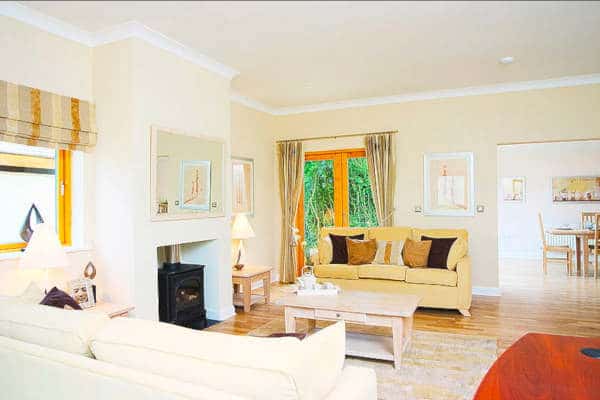


Self-catering cottage feasibility study:
A feasibility study would typically include the following components:
- Site Analysis: A thorough assessment of the existing property or site, evaluating its suitability for conversion into self-catering accommodation or the development of a cluster of new build cottages or lodges, will be carried out. A high-level review of the relevant planning policy context to identify any constraints or opportunities at an early stage will also be carried out.
- Market Demand: An in-depth analysis of the tourism marketplace, examining key trends in visitor volume and value, and current occupancy levels being achieved. Where appropriate, this will include targeted discussions with the local authority tourism officer and the Destination Management Organisation to gain a qualitative understanding of demand characteristics across the local and regional markets. A drivetime analysis will identify the residential population base within one- and two-hour drivetime catchments of the site. This will provide insight into the size and key socio-demographic characteristics of the short-breaks market. The competitive landscape will also be reviewed to assess existing tourist accommodation provision and identify potential gaps in the marketplace. Importantly, the study will reflect the current economic climate, including the pressures of a rising operational cost base alongside reduced visitor spending power, and consider the implications for self-catering accommodation and the wider tourism sector.
- The Self-Catering Product: Working with an established architectural practice specialising in conservation and sustainable design, the feasibility study will incorporate specific design input and provide capital cost estimates for the development proposal.
- Staffing: An appropriate management and staffing model will be identified. This will reflect the scale and nature of the development, whether it is a single cottage or a larger cluster, and will underpin the financial modelling.
- Tariffs and Occupancy: A tariff model will be developed that reflects the character and quality of the proposed offer. This will be informed by an analysis of comparable self-catering operations in the market. An accompanying occupancy model will set realistic occupancy levels.
- Financial Projections: Drawing together research and analysis, a three-year trading profile will be prepared, setting out projected income streams and cost centres associated with the operation. A sensitivity analysis will be included to test performance under a range of scenarios.
- Risk Management: A structured risk assessment will be undertaken, addressing financial, market, and operational risks. For each risk identified, practical mitigation strategies will be outlined to support informed decision-making and investor confidence.
Project examples:
- Working with Neath Port Talbot County Borough Council, we carried out a feasibility study to introduce accommodation within the walled kitchen garden at Gnoll Estate Country Park. This also included developing Pond Cottage into a self-catering cottage.
- Working with a golf course operator, we carried out a feasibility study to develop a cluster of self-catering cottages. Our work helped to support the development of the self-catering cottages
- Working with a local authority, we assessed the feasibility of introducing visitor accommodation within the grounds of a Grade I-listed manor house. Part of the feasibility study included assessing options for developing a former mill site and barn into self-catering accommodation.
You can find out about the range of tourist accommodation projects we have worked on across the UK.
How can we help?
If you have any questions about carrying out a feasibility study for a self-catering cottage development, or would like to discuss our work, please don’t hesitate to call Richard Linington on 07866 742628 or email richard@pslplan.co.uk