
Recreation Management Plan – Peatland Restoration and Reafforestation
To address the twin crises of climate and biodiversity loss alongside energy security afforded by renewable energy, peatland and native woodland restoration, projects are underway across the UK. We are involved in planning how recreation management and tourism can be accommodated on these landscape- and catchment-scale sites.
As sub-consultants to Duncan Bryden Associates, rural regeneration specialists, we were commissioned to develop a Recreation Management Plan or RMP to support access across an upland site covering more than 14,000 acres and rising to over 2,500ft. Peatland restoration and woodland creation on this scale will transform the landscape over many years, and the development proposal must consider continued public use and enjoyment from the outset.
The Recreation Management Plan assessed the existing network of paths, access points, visitor information, car park provision and current recreational activities, and it sets out how these can be retained and adapted. Importantly, the Recreation Management Plan reviewed the wider legislative landscape and policy context, including the Land Reform (Scotland) Act 2003, the Land Reform (Scotland) Act 2025, National Planning Framework 4 (NPF4), and the local place plan.
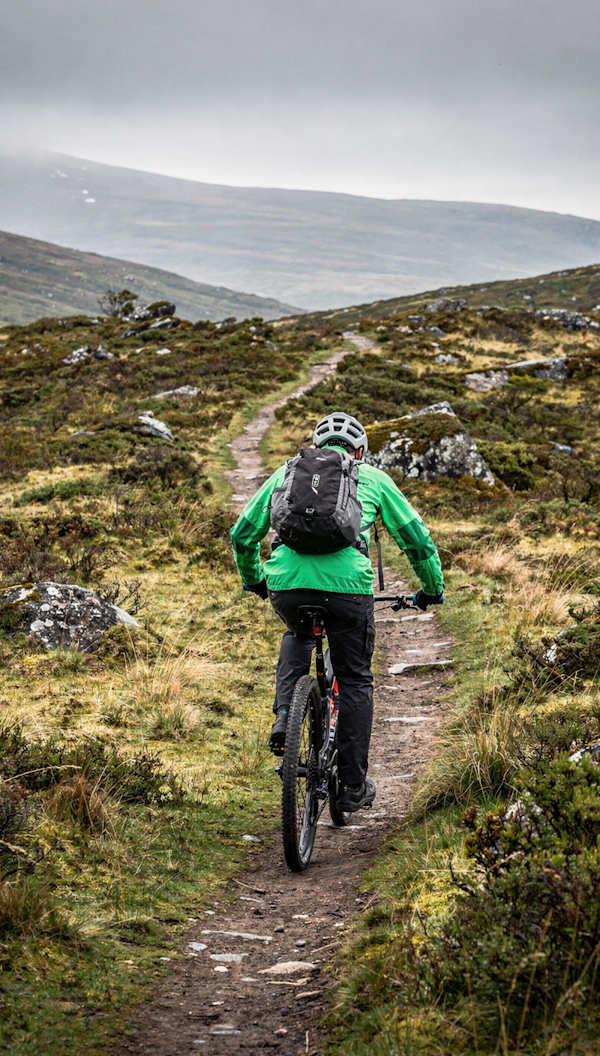
The Recreation Management Plan identifies where current routes may conflict with sensitive habitats, newly planted areas, and active work, and proposed practical, proportionate solutions. Particular attention was given to accessibility, showing that routes and facilities remain welcoming to a wide range of users, including walkers, cyclists, runners, skiers, families, wild swimmers and those with limited mobility.
Central to the RMP is balancing competing priorities: the land manager’s aims and operational requirements, visitor safety expectations, the interests and well-being of neighbouring communities, and the ecological objectives at the heart of the restoration project (particularly minimising impacts and disturbance on sensitive species and habitats). Wildfires are a particular concern for these evolving landscapes and wildlife like Golden Eagles, which have large home ranges.
Through consultation and evidence-based analysis, the Recreation Management Plan provides a clear framework (action plan and indicative costs) to guide responsible access and sustainable recreation. It also provides a monitoring framework. Ultimately, the aim is for landscape restoration and recreation to reinforce one another, deepening visitors’ appreciation of the place while protecting its long-term resilience.
How can we help?
If you have any questions about preparing a recreation management plan, or would like to discuss our work in the wider recreation or tourism sectors, please don’t hesitate to call Richard Linington on 07866 742628 or email richard@pslplan.co.uk.